Usefulness should be designed
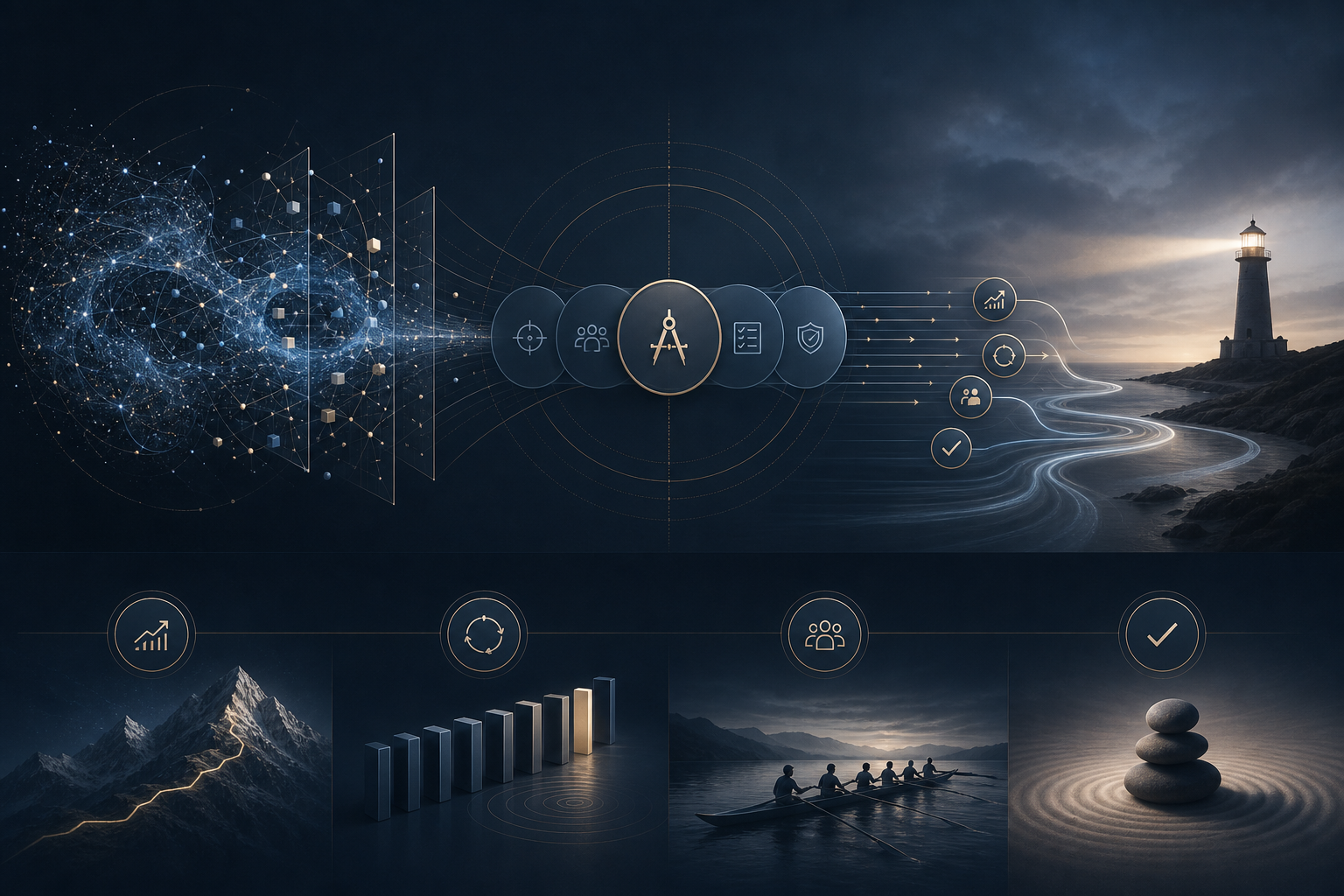
A surprising amount of AI work still optimises for novelty, style, or local brilliance. Those things can be entertaining, but they do not necessarily help a business move forward. Useful systems are built for something more durable: momentum protection, clearer decisions, continuity under pressure, and the quiet reduction of unnecessary work.
What useful feels like inside a business
When AI becomes useful on purpose, the change is practical. Fewer loops stay open. Reporting arrives in better shape. Leaders can see what matters sooner. The next action is easier to name. Work does not merely sound more sophisticated; it becomes easier to carry. That is a far better measure of intelligence than how polished a paragraph looks in isolation.
The design implication
If usefulness is the goal, then architecture, memory, verification, and process all need to serve that end. The system should not chase charm when clarity is needed, and it should not chase novelty when persistence is what the business will feel a week later. Useful on purpose is not a slogan. It is the consequence of choosing continuity over theatre.